A factor that the article doesn't emphasize enough is the extent to which schedule pressure contributed to the bugginess of the released rifle.
The Kalashnikov had been designed in 1947, (hence, AK-47), but it took more than a decade before a bug-free version (the AKM) was considered reliable enough to make standard-issue. (When this article refers to "AK-47s", most of the actual weapons involved were actually AKMs.)
The US, by contrast, had spent the decades since WWII resisting the assault rifle concept, so that when Vietnam rolled around their fantastically rich and well-funded military found its infantry outgunned by peasant militias wielding second-hand Soviet rifles. So the rifle went from initial acceptance, including these kinds of stupid last-minute design changes that are common in any project, to large-scale combat deployment within a year; normally, there would have been years of incremental usage to catch these bugs, but the rifle was so desperately needed that it was rushed to the front.
If the article is correct, the schedule pressure was entirely manufactured: In the AR-15, the US had a reliable, production-ready assault rifle, that those in the infantry who had tested it were enthusiastic about, but the ordnance board delayed and eventually stopped its adoption with dogma-driven design changes that led to the M-16 also being unreliable as well as late.
"Deadlines are always arbitrary. Deadlines are a tool used by managers to control costs. That is their only purpose. Often, managers try to justify deadlines by citing other dependent deadlines, but those deadlines are always just as arbitrary."
- Alan Cooper
Chris Voss' book "Never Split the Difference" goes into this.
He posits that bad deals come from people being strict about artificial deadlines... and it's better to have no deal than a rushed deal. Try it next time someone tells you there's a hard deadline... just tell them you'll deliver when it's done.
Not trying to be facetious here: I'd love to have this level of freedom from deadlines, but the grim reality is that it'll remain fantasy for most people at most stages in their careers.
Me: "I'll deliver when it's done."
High school teacher: "Suit yourself. You'll lose 10% of your final grade for every day it's late."
Government: "We've assessed a late fine because you missed our entirely arbitrarily set tax filing deadline."
Grad school supervisor: "You submitted the final copy of your dissertation four days after the administrative deadline, so you're stuck paying another semester's tuition."
The book doesn't say to defy deadlines... it just states that almost every negotiation has the deadline being an arbitrary thing being chosen at random.
IMO, that kind of last-minute top-down bikeshedding is something that needs to be accounted for in the project scheduling process. The rifle was on-schedule for an idealized process, but didn't have enough time to go through all the usual BS.
1944 actually, there were examples in trials by 1946. 1947 was the year of adoption of a developed version but it was only ever called AK in Soviet documents.
Something else the article gets wrong is use of a hyphen in M14, M16 etc. A minor point but immediately shows a lack of familiarity or research with the subject. It's like reading a 2019 article that talks about the i-Phone.
1946 was the first design that was submitted to the trials. And it was almost completely redesigned after it failed in those trials. For one example, the AK-46 prototype was short-stroke piston. Take a look:
> Something else the article gets wrong is use of a hyphen in M14, M16 etc. A minor point but immediately shows a lack of familiarity or research with the subject. It's like reading a 2019 article that talks about the i-Phone.
I'm not sure how much to read into that. There are programmers who talk about JAVA and "C" and nobody seems to call them on their typographical oddities. In fact, most people seem unwilling to even see them fnord fnord fnord.
"The US, by contrast, had spent the decades since WWII resisting the assault rifle concept, so that when Vietnam rolled around their fantastically rich and well-funded military found its infantry outgunned by peasant militias wielding second-hand Soviet rifles."
They would have had M14's in the beginning of the war, with 7.62MM rounds and 20 round magazines. The M16 was lighter, since the M14 had a wooden stock, but the 5.56MM rounds were smaller, and the initial models also had 20 round magazines.
So, I'm struggling with how the M16 would have been even a paper improvement over being "outgunned". I suspect it was more about being lighter and carrying around more rounds of the smaller lighter ammo.
>So, I'm struggling with how the M16 would have been even a paper improvement over being "outgunned".
The round it fires is more suited for the reality of combat, which is that 90% of combat takes place within 100 meters and the last 9% happens within 300 meters of the enemy. In fact, you can't even see a normal target with non-magnified sights at 300m, much less a target that's trying its hardest to hide from you.
The M14 is designed to be effective at 600-800 meters. And the cost to being effective at that extended distance is that you have to dump lots of energy into the projectile, which means that the shooter has to deal with a large recoil impulse. If you are taking a shot at 100m with an M14, your sight picture will be completely gone after you fire once.
With the M16, however, the recoil impulse is roughly 1/3rd of the M14's (mainly due to the cartridge; the AK-47 uses a similar one energy-wise). Your point of aim doesn't meaningfully change from shot to shot, so if your first shot misses you now have the ability to try again multiple times (and can fire bursts effectively if needed). Maybe there's a slight chance you need to hit your enemy multiple times, but the cartridge makes getting that first shot significantly easier and you can carry more ammunition anyway.
First, one can easily see a normal target at 300m with unmagnified iron sights. US soldiers have to qualify on drab green pop-up targets at 300m on a semi-forested range and they routinely hit them. At 100m, the target is just a head and shoulders. Easy to do with an M-16 given a little practice.
Second, the AK-47 is quite poor at preserving point of aim across successive shots due to its design. This is because the reciprocating mass (i.e. the piston) is far out-of-line relative to the point of shoulder contact, creating torque that pulls the barrel away from the point of aim even with a relatively low-energy cartridge. The M-16 action, by contrast, has an almost perfectly inline reciprocating mass that produces little torque, among the very best of all common assault weapons, which makes it unusually easy to control point of aim during rapid fire.
For "normal infantry use" AK is still a massive improvement over anything firing a full power rifle cartridge. Sure the AR platform makes for a better shooter's rifle but that wasn't a high priority design goal of the AK.
No matter how short your shorts are (I hope nobody here gets that reference) trying to lay down full auto suppressing fire with a FAL is going to be less effective than with an with an AK and its intermediate cartridge.
Your first point is trivial. Shooting a fixed point target from a fixed position is very different from shooting a moving target with an unknown position from an unknown position. The rifle qualification exists to establish that soldiers know how to aim the rifle, not to establish that they can hit a real target.
The rifle qualification for the USMC is 500 yards from a fixed point, Soldiers and Marines are generally expected to hit a man sized target from a supported position at 500-600 yards and non-supported at 200-300.
During my last rifle qualification, I was able to hit 10/10 rounds on the 19" silhouette at 500m - USMC trains at a further distance. I've done this with iron sights and optics. It's not very difficult.
The smaller bullet is the point. A 7.62mm bullet is overkill if you're aiming at a person less than half a kilometer away. The essence of the assault rifle concept is to throw away that excess individual bullet power in order to gain volume of fire.
The magazine size alone is not a good indicator of practical rate of fire; that has more to do with recoil, which the M16 reduces by using a smaller bullet.
For an understanding of the assault rifle concept, I recommend reading the history of the first assault rifle, the Sturmgewehr 44 (https://en.wikipedia.org/wiki/StG_44#History):
In the late 19th century, small-arms cartridges had become able to fire accurately at long distances. Jacketed bullets propelled by smokeless powder were lethal out to 2,000 metres (2,200 yd). This was beyond the range a shooter could engage a target with open sights, as at that range a man-sized target would be completely blocked by the front sight blade. Only units of riflemen firing by volley could hit grouped targets at those ranges. That fighting style was taken over by the widespread introduction of machine guns, which made use of these powerful cartridges to suppress the enemy at long range. Rifles remained the primary infantry weapon, but in some forces were seen as a secondary or support weapon, backing up the machine guns.
This left a large gap in performance; the rifle was not effective at the ranges it could theoretically reach while being much larger and more powerful than needed for close combat.
<snip>
In the spring of 1918, Hauptmann (Captain) Piderit, part of the Gewehrprüfungskommission (Small Arms Proofing Committee) of the German General Staff in Berlin, submitted a paper arguing for the introduction of an intermediate round in the German Army with a suitable firearm. He pointed out that firefights rarely took place beyond 800 metres (870 yd), about half the 2 km (1.2 mi) sight line range of the 7.92×57mm round from a Mauser Gewehr 98 rifle or less for MG 08 machine gun. A smaller, shorter, and less powerful round would save materials, allow soldiers to carry more ammunition, and increase firepower. Less recoil would allow semi-automatic or even fully automatic select-fire rifles, although in his paper he called it a Maschinenpistole (submachine gun).
I don't think recoil was the primary driver, actually. Weight was. This becomes readily apparent when you shoot a Kalashnikov side by side with AR15 (a civilian semi-auto variant of select fire M16). A loaded mag for a Kalashnikov is over twice the weight of a loaded M16 mag. And you do need to carry a lot of ammo if you don't want to run out, especially for the AK which is much less accurate.
Whoever designed the M16 realized that killing the enemy wasn't really necessary. Heavily wounded enemy is as good as dead.
These do not contradict each other. They noted that for the same weight in ammo, it's better to hit the target with a burst three lighter bullets than with a single heavier one. But you also need lower recoil for that burst to be accurate, and M16 is very much designed around that (straight stock etc).
The idea that smaller caliber was deliberately less effective on the basis that wounding is just as good as killing is a much later invention, and it only came about back when they switched from M193 to M855, which traded lethality for better armor penetration, and even then as retroactive justification. There's no evidence that this was ever a part of the design spec for any of the M16/M4 series, though, or any official military doctrine. Neither did Soviets consider it when designing AK74.
In any case, when 5.56 ammo fragments - as the original mil-spec ammo was designed to, and recently redesigned to do again with M855A1 - it produces wounds far worse than mil-spec 7.62 NATO that preceded it:
A Kalashnikov is already an assault rifle - it uses a smaller and lower-recoil bullet than the full-powered rifle cartridges that came before it. An American design that only copied the assault rifle concept would have probably had a similar-weight round to an AK.
The M16's even lighter round was the result of a separate American innovation, the Small Caliber High Velocity bullet, which trades bullet size for propellant size. Even smaller bullet than the AK, but a flatter trajectory (hence the improved accuracy, helped along by the M16's interesting operating mechanism), and even lighter weight than first-generation assault rifles.
I have heard that part of the rationale for a lower caliber round was that it was more likely to wound than to kill outright - and a wounded soldier would be more of a burden than a dead one.
Yes. Imagine if one of your teammates is wounded. You and your friends will attempt to drag him out of harm's way, treat his wounds, protect him. You'll call a helo for medevac, etc. Now imagine that your same teammate is dead. You can continue the fight without consuming resources and energy on him until the fight is over.
> The smaller bullet is the point. A 7.62mm bullet is overkill if you're aiming at a person less than half a kilometer away.
Some time ago there was some drama wrt 5.56 being too ineffective, as well as having poor ballistics at longer ranges, and there were a bunch of intermediate calibers designed such as 6.8 SPC and 6.5 Grendel. Did anything ever come out of this (or, was it always just an internet gun nut dream?), or was the 855A1 improvement enough that the headache and cost of a caliber change was discarded?
The US military currently has one or more requests out there for companies to submit 6.8mm rifles for trials, so it could potentially still happen. Also, according to Wikipedia, Serbia is adopting a rifle in 6.5 Grendel as its primary service rifle. I don't see the US moving towards 6.5 Grendel, except on the civilian market - I took a deer with a 6.5 Grendel last year, and my cousin has taken several as well as a black bear.
Part of the issue is that those assumptions of relatively short ranges were reached in an environment of actual fighting in jungle environments in Vietnam, and prospective fighting in built-up or forested environments in Europe. In arid regions, battle rifles with their longer ranges and lower volume of fire are arguably a better tradeoff. See, for example, the use of early-20th-century British battle rifles by the Taliban (https://atwar.blogs.nytimes.com/2011/01/31/taliban-gun-locke...), resulting from terrain like the title photo at (https://atwar.blogs.nytimes.com/2010/04/19/a-firsthand-look-...)
(Their use is deterred by other factors, namely ammunition availability and concealability.)
The new round has much better terminal ballistics, and better stability at range. It's better, but not perfect for the ranges of Afghanistan. Hopefully we won't have to worry about that for much longer.
The Army is still looking at a larger caliber for their Next Generation Squad Weapon program, and that experimental round may wind up being lighter weight as well due to its polymer casing.
Mostly resolved using heavier bullet weights. There are a bunch of different bullets out there (MK262 is the standard as I recall), and I think the 6.5/6.8 are unlikely to be adopted as supply chain logistics says to remain with 5.56.
I read a few articles on weapon magazines in 80s about this.
1) while 5.56 is lighter, when it impacts with the human body the bullet will often impart the so-called "tumbling effect" (i.e. instead of keeping its straight course it basically tumbles around inside your flesh - and may create secondary shrapnel if it hits a bone, causing a lot of damage and hydroshock). So yes, if you want to hit someone behind light cover, like a wooden door, 7.62 is more effective, but if you hit directly the resulting damage is equivalent.
2) yes, the bullets are lighter/smaller - this means your average infantryman can carry more magazines as part of his load, so you may be able to fight a bit longer than you opponent packing 7.62.
EDIT: added some words to clarify the tumbling effect.
Tumbling and fragmentation are both highly dependent on terminal velocity and the underlying stability of the round. For instance M855 will not fragment reliably unless it hits ~2700FPS, which out of a 14.5" barrel gives you under 100 meters.
In Mogadishu, M855 poked neat little holes, rather than tumbling or fragmenting, in Somali fighters with very little body fat.
M193, which is obsolete for military usage but still the most popular bulk round on the civilian market, almost never tumbles in gel tests as it is overstabilized by the 1:7 twist, 16" barrels predominant in civilian ARs.
That tumbling effect sales pitch is the most baffling part of this whole story to me. It is great in a lab with ballistic gel on an uncovered target, but hardly the reality out there.
I think sooner than later this whole fiasco will be in the past once the move to 6mm cartridges become a thing.
When I joined the Territorial Army here in the UK back in the 90s, some smart arse said to the instructor some thing like "but isn't the 5.56 and lighter round and doesn't hit as hard as the 7.62", to which he replied "that may be so son but if someone shoots you up the arse with it, it won't half make your eyes water".
>I suspect it was more about being lighter and carrying around more rounds of the smaller lighter ammo.
And viable automatic fire. Yeah, technically you can have a full auto M14 but 5.56mm and 7.62x29mm are really in another league compared to 7.62x51mm when it comes to controllability.
So the rifle went from initial acceptance, including these kinds of stupid last-minute design changes that are common in any project, to large-scale combat deployment within a year; normally, there would have been years of incremental usage to catch these bugs
Large organization needs to roll out a new model on an accelerated timescale. Cost cutting and time saving decisions are made, which have disastrous synergistic effects in the field.
Sounds very familiar.
EDIT: In order to understand the design genius of the AR-15/M-16 rifle, hold 50 rounds of 9mm pistol ammunition in your hand, then 50 rounds of 5.56 ammo. It varies by the particular kinds of ammunition, but on average, they weigh around the same. Yet the rifle is many times more powerful. How is this so?
1) More propellant weighs a lot less than more lead. 2) Energy goes up by the square of velocity.
Everything you said, but also 3) a longer barrel means you get more of the energy of the propellant into the bullet instead of into the surrounding air.
3) is in the service of 2) more velocity. Lately, I've been thinking, why have a pistol as a backup sidearm at all? Why not something like a Kel-Tec Sub2000, just slightly smaller, perhaps with a 10" barrel, but also shoulder-able?
I said something like a Sub2000, not exactly a Sub2000. I bet a 10" short barrel rifle of the same general layout could be made to weigh well under 3 pounds.
This is an oversimplification. The AK-47 and AKM both fired a full-size 7.62mm rifle cartridge. The US battle rifle going into Vietnam was the M-14, a full-auto iteration on the venerable M1 Garand rifle that also fired a full-size 7.62mm rifle cartridge.
The key innovation was to instead use an intermediate-sized 5.56mm cartridge, which the Soviets didn't do until the AK-74 in 1974, a full decade after the M16 went into service.
The US had been circling around the "assault rifle" concept for some time prior to encountering the Kalashnikov in the field. In 1945, just as WWII ended, the M2 Carbine went into service. Like modern assault rifles, the M2 Carbine had select-fire capability and fired an intermediate-size cartridge. In this case, it fired the .30 Carbine cartridge popularized by its predecessor the M1 Carbine. (In this respect it was similar to the German StG 44, which was chambered in a "short" 7.92 mm cartridge instead of the 7.92 Mauser cartridge used by the Karabiner 98k.)
In Korea, the .30 Carbine cartridge noticeably underperformed, which motivated a migration back to full-size rifle cartridges--in this case, the 7.62 NATO, a more compact ballistic near-equivalent to the .30-06. (The Chinese and Koreans, like most countries in WWII, tended to stick to either submachine guns or bolt-action rifles which were still outgunned by the Garand.) Select-fire capability was reintroduced with the M-14 in 1959, which was also intended to replace the venerable WWI-era Browning Automatic Rifle.
Curiously, a predecessor of the M16 was the AR-10, which also fired the 7.62 NATO cartridge and competed in the 1956 trials where the M-14 design was ultimately selected. Despite the high performance and accuracy of the AR-10, the design was not yet reliable and mature, leading the military to make the conservative choice of adopting the M-14 instead. When the military decided to transition to an intermediate-size cartridge later on, the AR-10 was adapted into the AR-15, which is the basis design today for the M16 rifle, M4 carbine, and (with significant modifications!) the M27 IAR.
The pre-74 AKs fired a full-caliber, but half-length, intermediate cartridge, the 7.62x39mm. This was easier to manufacture on existing pistol round tooling than a SCHV round.
The 7.62mm NATO cartridge you're thinking of is 7.62x51mm, and fires a 25% heavier bullet at 18% higher velocity, for 66% more total kinetic energy than the early AK round. And the Soviet full-power round that the 7.62x39 replaced, the 7.62x54mmR, is even larger.
"The Kalashnikov had been designed in 1947, (hence, AK-47), but it took more than a decade before a bug-free version (the AKM) was considered reliable enough to make standard-issue."
Lost history fact. The "AK-47" saw combat in world war 2 as the German "StG_44" [1]. The StG_44 was a large round, automatic, large capacity, no belt, replaceable clip, death machine.
Once the Russians captured a StG_44 they quickly modified it, and designed the AK-47, which was an even better version.
I've not found a reference anywhere that the AK-47 is a copy of StG-44. The outward look is kinda pointless. What matters in a rifle are all of the inner components. However, I can find only anecdotal references like https://www.forgottenweapons.com/ak-and-stg-kissing-cousins/
"This isn’t to say that the sturmgewehr StG-44 didn’t make an impression on the Soviets: It’s difficult to imagine an enemy small arm that had as much impact on Soviet small arms design as the StG-44, but put into context the weapon represents more the proving out of a pre-existing idea than the introduction of something completely new."
They look similar, but the operating principle is significantly different. The STG-44 did have a huge impact on the Soviets, they learned a lot from it but operationally but not technically. Mikhail Kalashnikov took the concept, but the AK is not a modification of the STG-44 mechanically. That's a common misconception.
It's literally just a coincidence. The AK uses a totally different operating mechanism. The only similarity is the banana mag but that's just the reality of the cartridge dimensions.
Had a little known designer ripped off the STG44 the Soviets would not have adopted it in 1947. They would have laughed at it.
Not really. The bolt locks differently, but it uses a bolt carrier, gas piston, and buffer spring like an AK.
That said, the easiest way to dismiss the idea that an AK47 is a copy of the STG44 is to look at some of the gas operated rifles that preceded it in the Soviet Union, like the SKS, SVT-38, and AVS-36. Except the rotating bolt, they already had all the features of the AK in the 30's, and the rotating bolt is the one thing the STG44 doesn't have.
> The "AK-47" saw combat in world war 2 as the German "StG_44"
The StG 44 was a different rifle with a different design.
> The StG_44 was a large round, automatic, large capacity, no belt, replaceable clip, death machine.
The StG 44's round was only slightly larger than the Soviets' AK round; the only reason for their slight difference is that each country decided to make their new intermediate round by taking the same caliber as their respective full-power rounds and making them shorter. (For ease of manufacturing.)
> Once the Russians captured a StG_44 they quickly modified it, and designed the AK-47
They copied the concept (using a smaller round to shed weight and gain volume of fire), but the actual weapon design was new.
One of my favorite movies, and very popular amongst vets and folks who work in the defense industry. An instructor actually played the "scope creep" scene for us at a course I attended back when I was an Army officer.
As an HBO original movie, it's also available for streaming on HBO GO/HBO NOW for those who have HBO subscriptions. (I believe it can be streamed via Amazon Prime Video as well, as they have a partnership with HBO.)
I'm reading through Human Error by James Reason [1], on the basis of a HN recommendation. It's been excellent so far.
As regards software error, we do so many things (standard style guides, pair programming, code reviews) to limit error, yet give so little thought to where and how errors come to be. And specifically, what methods would best combat them.
This article and the procurement process it documents is a great example of "intentional but mistaken actions". Which is to say the actions taken were intentional, the actions were realized as intended, but the original formulation was flawed.
Reason notes these errors tend to thrive in overly compartmentalized, deep, bureaucratic environments. Everyone is doing their job, but there's no one keeping an eye on the big picture when the train heads off the rails.
The difficulty, according to him, is that higher-cognitive checks needed to short circuit these kinds of errors tend to be less effective (than lower, more primitive ones). IOW, we delude ourselves that everything is fine as often as we recognize the issue.
I expect this is part of the secret effectiveness of pass/fail unit testing. It's hard to rationalize a red indicator into a green one.
This one here is a slightly different case to "intentional but mistaken". It is however one I've seen in software engineering environments: Person A designs something (in this case it's a gun, in software it could be an architectural pattern), Person B then insists on adjusting it, either ignoring or misunderstanding Person A's idea, and the result is something that is quite flawed. The best solution I think for these sorts of problems is for either Person A to be in a position of authority such that Person B _can't_ modify the design, or for Person A to design it exactly how Person B expects it to be designed.
The former presupposes that A is right, which is unknown a priori. It could very well be that A made a mistake, and B caught and corrected it! Or that B had a flash of genius and saw a better way that A missed.
Which is how we arrived at, and still use in physical engineering, waterfall design. Its strengths were never meant to be adaptability to customer needs, but rather fully specified and communicated interfaces between components. Which is not nothing.
The former has happened a number of times, for example with Kelly Johnston and Lockheed martin's Skunk Works, or many other institutions with charismatic dictatatorial engineers at the helm (Tesla, Linux, Microsoft). I'm definitely not saying that their respective leaders don't make bad decisions, but rather that a suboptimal solution, consistently implemented results in a better outcome than an inconsistent solution "optimised" by individuals along the way.
And yet 40 years later the AR15(M16/M4) is one of, if not the best firearm platform to have ever existed. It is really interesting to see to follow the sorted past of such a successful firearm.
Personally I believe that the reason that the AR15 is so popular (at least in the civilian world) is more that it's lego for adults who like guns, and less because of its utility as a platform.
That's not to say it's not a good rifle though, but I don't think that in a military context it's fundamentally better or worse than any of its peers, such as the H&K G36, the Steyr AUG, or the SA80.
>Personally I believe that the reason that the AR15 is so popular (at least in the civilian world) is more that it's lego for adults who like guns, and less because of its utility as a platform.
At least in the US and Canada, the primary driver is cost. The AR-15 is extremely cheap to make because the receiver is not a pressure-bearing component, and because you need very few machines to make the most important parts (of which there are fewer than most other guns due to the design).
It doesn't help that import restrictions in the US make everything that's not an AR artificially expensive (complying with them has parts/labor overhead if it's even possible in the first place).
The other guns you mentioned are not only more expensive to produce, but they also perform much worse (the SA80 had problems with literally every single part breaking or warping, the G36 melts because its barrel is cast into plastic, the AUG fires when it shouldn't and doesn't handle as well as an AR) to the point where nearly every country that currently uses these weapons are replacing them with some variety of AR15. The original design (gas piston behind bolt = no rotational forces against the carrier = no reinforcement needed in receiver) really is that good.
Do you consider the M27[1] to be an AR15 variant? Apparently the US Marines want everyone to use it? The "direct impingement gas system" has been changed to a "short stroke piston".
At which point is one weapon merely a variant of another? Isn't this change in the action a significant improvement?
It's an AR-15 variant just like the HK-416 it's based on. Yes, it has a piston, but technically the DI system has a piston too -- it's just configured differently.
The M27 / HK 417 is an AR15 with a gas piston retrofit. There is an advantage to piston operating systems for really short barrels, where DI systems do not excel.
In fact, many such piston AR retrofits exist in the US civilian AR market, but they’re generally thought to be of “unproven” longevity, at least.
The advantages of the retrofit piston being slim and light is that the recoil increase is small. The disadvantage is that durability is questionable, as those pistons experience a lot of violent force and most guns designed from scratch to be piston operated have significantly heavier duty pistons, for good reason.
You can read online of Marine armorers lamenting how their M27s are breaking down at a rate much faster than their M4s. This is of course anecdotal, but it is also
not entirely worthless data.
The M27 upper is 100% compatible with a standard AR15 lower. The main advantage to the short stroke piston is that the gas tapped off the barrel that operates the system has less distance to travel before it hits the piston compared with the standard system, and so it works more reliably with short barrels than direct impingement.
The "direct impingement" system of the M16 / AR15 isn't really true direct impingement, as the bolt itself works as a gas piston within the bolt carrier. But the gas has to travel much further to reach it than with a conventional piston.
The reason it's more reliable, in my experience, is that direct impingement system introduces a shit load of fouling into your chamber and all the moving parts. After about 1k rounds, that bolt starts to move slowly from all the fouling, then you'll start to experience inconsistent feeding / ejecting. It's a shitty system and it's about time they've done something about it. The traditional fix is to dump a load of CLP into the rifle...which attracts sand and dust.
I think there are advantages over much of the competition. The SA80 was unreliable and ridiculously heavy. The Steyr Aug isn't modular enough - it's a big hunk of plastic and doesn't have enough space on the front to add accessories. The G36 is also a bit heavy, but has been canned due to persistent heat problems affecting firing accuracy. The polymer construction just isn't up to it. Also both bullpups suffer from horrible triggers, it's a problem with mechanically transferring the trigger action to the back of the gun.
The AR 15 platform has benefited hugely from a lot of refinement and investment over a very long time. That's certainly true, but Stoner's concept for it is just really, really good and the fact that the design issues were all tractable and the further refinements have been largely successful is testament to that fundamental soundness.
Um... the difference in the AR15 and M16 is a hole in the lower receiver, an auto sear/pin/spring, and a different safety/disconnector.
It’s beyond fair to lump them into the same thing. And GP is right, there is currently no overall better personal defensive weapon in the world than the AR15/M16.
The entire point of this article is the difference between the AR-15 and the M-16. So if they are essentially the same, that means this article is pointless. That type of assertion needs some strong evidence given how well-researched the article is.
The 3 differences the article lists between the AR-15 and the M-16 are:
1. The M-16 added a useless "manual bolt closure" making it a bit heavier.
2. The M-16 rate of twist was changed from one-in-14-inches to one-in-12, which made it 40% less lethal.
3. The M-16 switched from IMR 4475 powder to ball powder, which made it much much less reliable. After tons of US soldiers died due to the unreliability, they modified the ball powder and changed the mechanical "buffer" of the rifle, which made it more reliable, but still less than the AR-15.
The manual bolt closure is far from useless in a military context and has two common real-world use cases today that I am aware of.
The increase in twist was because the rifle failed to stabilize bullets in some environments during testing, which is a pretty gross defect. And higher twist rates don't decrease lethality, it is actually the opposite for well-understood reasons. Current barrels are 1-in-9 IIRC.
The switch to ball powder happened after the initial usage of the M-16, which is correctly characterized as a logistical screwup, and they ended up redesigning the rifle so that it would perform correctly with the ball powder.
It wouldn't stabilize tracer rounds, it was perfectly fine with standard issue rounds. The manual bold close wasn't in Stoners original design, it was requested by the military. In my opinion the internal piston design is the true genius of this rifle. Recoil is almost straight back so follow up shots are much easier.
As the Russians seem to be moving to 5.56 the American military is looking to move to the 6mm class.
It allows you to manually (re)load and arm the rifle very quietly; the normal charging action to chamber the first round in a magazine is quite loud and recognizable. Useful for stealth. And if you accidentally get a ton of dirty in the action when the bolt locks back i.e. when the magazine is empty, you can force the first cartridge on a new magazine to chamber through the dirt (the first shot will usually clear the dirt out of the critical areas).
Failure to stabilize the bullet was a feature, not a defect. At close range that unstable bullet had more killing power (Assuming fmg, not civi rounds). Increasing the twist extended range but sacrificed effectiveness at likely combat distances.
There are two different AR-15s: ArmaLite AR-15 which is what the article is about and from which M16 was derived and then modern day Colt AR-15 which is civilian version of M16.
There are a hundred (at least) vendors who make AR-15 pattern rifles, Colt's patent expired several years ago.
The Armalite AR-15, the Colt AR-15, the Colt M4, Colt M4A1, FN M4A1, and the military M16, M16A1, M16A2, are all the same weapon with minor modifications. The significant differences are barrel length (interchangeable among most if not all), upper (slick side or with forward assist, not consistent among any of them), buffer weight (generally the full-auto versions have a heavier buffer), trigger model (full auto, 3rd burst, and semi-only -- many variants exist and are interchangeable among most models w/ exception that the civilian models do not have the upper hole that allows for the full-auto trigger components to be installed).
One of the new AR15 with .300 AAC Blackout munition, maybe. But there are some really good rifles out there and, especially of the 6mm breed. Beretta has the ARX-160, IMI and the Tavor is a awesome, the Russians have the A-545/A-762 which solves the AK's recoil issue.
In general it is a bold statement to claim something to be the best with so many new options out there.
Are modern versions more true to Stoner's original design, like the original rifling etc as indicated in the article? And do today's civilian AR15's generally have the manual bolt closure?
>And do today's civilian AR15's generally have the manual bolt closure?
Most still do, but that is just inertia that is slowly dying out, it is not uncommon for civilian AR rifles to not include a forward assist, i.e. manual bolt closure. I don't keep up with military rifle configs to know if they still continue with forward assists.
>...like the original rifling etc as indicated in the article?
There is quite a lot of variety in barrel rifling these days, 1-in-7 isn't uncommon today and with the variety of rounds available, i.e. heavy bullets/light powder(slow) and light bullets/high powder(fast), barrel twist is also highly variable depending on what works best for your barrel length and cartridge selection.
Overall the AR platform has moved far beyond Stoner's original design, from the Marines recently adopting a "light machine gun" version of it, to the very short length M4s that is the standard today for the US military. Add into that the huge variety of uses and configurations that civilians use the rifle can wear so many hats. There is actually a really interesting series if you're interested from InRange TV, a firearm YouTube channel, that takes a look at what the AR15 might look like if designed with today's material advancements: https://www.youtube.com/watch?v=vI5NPiicXjE
InRange and Forgotten Weapons are both fantastic channels to lose a day learning about guns with! In particular, the (linked) "what would Stoner do" series was really interesting to me.
The rifling has generally gotten more extreme. IIRC Stoner wanted 1:14 and the army went to 1:12, but the modern rifles are moving to a 1:7 twist rate. The ammo is different, it's heavier and does better at low velocity so the twist rate doesn't matter much for lethality.
Civilian ones have a lot more variety. For example, with rifling twist rate, it can vary from as slow as 1:16 to as fast as 1:6, depending on whether the rifle is intended to shoot very light and very fast bullets used to hunt small game, or heavier and longer match bullets used by precision shooters.
Military versions all have 1:7 twist (necessary to stabilize long-burning tracer rounds that were adopted as NATO standard, because they're longer). They do retain the bolt forward assist design, but anecdotally I've heard from some people who have actually used them in combat, so perhaps it's not as useless after all.
The only thing I can think of that was reverted to the original design is the fire control selector, which is not discussed in the article. It was originally safe/semi/full, but M16A2 replaced full auto with 3-round burst. It's generally considered a failed experiment, and M4A1 walked it back to full auto.
> They do retain the bolt forward assist design, but anecdotally I've heard from some people who have actually used them in combat, so perhaps it's not as useless after all.
Unless you can manage to keep it super clean and perfectly lubricated (which kind of counteract each other) you'll be using the forward assist now and again.
There's also a difference between perfectly clean and having used it a while where carbon builds up making it more reliable -- a lot less likely to need it after the third time through a live-fire exercise than pulling it out of the weapons room and heading down to the range.
> It was originally safe/semi/full, but M16A2 replaced full auto with 3-round burst. It's generally considered a failed experiment, and M4A1 walked it back to full auto.
We'd get yelled at if they caught us using 3-round burst because it was a waste of bullets. Each squad had 2 SAWs and each platoon had 2 M60s so they wanted the riflemen to try for precision fire (as opposed to "spray and pray").
I've spent too much of my life with an M16 it seems...
I'm generally amazed at how the 3-round burst as implemented in M16 even made it to a combat firearm, it's just so broken all around. Like the part where it never resets, and cycles even in semi-auto, so when you switch to burst, you never know if you're going to get 3, 2 or 1 rounds? Or, conversely, if you cut it off before the cycle is over, then the next trigger pull will just continue that cycle, with the same result?
From what I heard, this even affected semi-auto accuracy, because the trigger pull would vary a little bit in different stages of the cycle, making it harder to get that perfect break. Do you recall anything like that from your personal experience?
Forward assist gets used, in muddy or other unclean conditions. There is also a mental aspect. When waiting for combat, the FA is a great way to check your rifle is ready to fire, that the bolt is in place, without moving anything.
The M-16 was buggy, not an inherently bad design. If it had another few years to bake before being rushed into combat, it would probably have avoided the bad rap.
Given a few more years to bake, maybe it would have achieved parity with the already fully-baked AR-15? It seems like the perfect example of "Not Invented Here" syndrome and didn't need to exist in the first place.
The last-minute management-induced requirement of new ammo is an unfortunate but normal part of the project management process, and is usually part of that decade or so required to get a reliable system into soldiers' hands.
I'm not sure I buy that, a piston gun is generally much better than impingement. You can package a piston up in something that looks nearly identical to the AR15 but it's not the same as the original firearm. Also 5.56 isn't a great caliber for military purposes, on one side the lack of immediate stopping power of FMJ and on the other over-penetration in close quarters without frangible.
There is no statistical evidence that pistons are more reliable. Indeed, ARs with pistons are less reliable on average (although this is mostly because the AR bolt carrier / receiver interface is not designed with that in mind, and carrier tilt results if you try to adapt it).
Not using a piston has two advantages. First, it's lighter in general, and in particular, there's less reciprocating mass, which means that weapon is easier to control, especially in full auto. Second, the recoil impulse in Stoner's design goes directly back along the bore axis (which is why it doesn't have carrier tilt!), whereas pistons add an angular component, which translates to more muzzle flip.
The disadvantage is that you get carbon deposits in the action. But the effect is usually overstated - there were numerous tests with uncleaned ARs firing several thousand rounds without any ill effects from the carbon - it just keeps running so long as you keep lubricating it. According to Armalite, most of the deposits are in places where they don't matter, and where they do matter, the action itself is designed to remove much of them as it cycles.
I'm not surprised - obviously, the longer you go, the higher percentage of them will fail, and that's true for AK and others just as much. I'm specifically addressing the myth that because of the Stoner action depositing more carbon inside the receiver, you must clean AR much more often than other assault rifles, and that it will fail quickly if you do not.
So these experiments show that carbon accumulation is not the issue. There are other things about AR design that make it less reliable in some cases (and more reliable in others, like that infamous mud test), but they apply to both DI and piston ARs.
>piston gun is generally much better than impingement
Hello 2008, my old friend.
I’ve done high speed and thermal camera testing on AR firearms. There is no honest advantage of what you are calling piston guns over DI, which is a short piston on the carrier itself. There are good and bad examples of both, piston AR pattern guns have carrier tilt, extra weight, more parts, more required maintenance, and get just as dirty esp when suppressed as DI guns.
It’s an old opinion you have there. I lived through piston-mania 2008. DI effectively won when you look at anything remotely considering retrofit designs.
>a piston gun is generally much better than impingement.
The AR-15 is a piston gun, though: the piston is the bolt itself (the bolt carrier acts as its cylinder walls- this is the reason why the back of the bolt has piston rings). And because said piston is right in the center of the moving parts, you don't have to worry about those parts rotating off their axis (i.e. there's no force tilting them up or down)- the only reason the receiver needs to be there is to hold the barrel on.
This doesn't work for barrel lengths below about 10.5"; at that point an external piston system is indeed more reliable. Also, because the gas tube is a weak point in terms of heat dissipation, the internal piston AR isn't the best choice for sustained automatic fire- but in that case you just give one squad member an external piston gun much like how the Russians distributed their beefed-up AKs.
Logistics is your force multiplier. Sacrificing the (excessive) performance of 7.62 to improve the rounds you can field is well worth it. That said, 5.56 still holds up well in CQB, provided you have a sufficiently long barrel and a bullet with decent ballistics. But therein lies the problem. The move to shorter barrels means lower muzzle velocity which severely gimps a round that leans on velocity for its lethality. The move to shorter barrels has also necessitated the move to piston-operated guns like the HK416, but they don't come without negatives, especially when guys are over-gassing out of fear of stoppages.
>> And yet 40 years later the AR15(M16/M4) is one of, if not the best firearm
>> platform to have ever existed.
The latest wars in Afghanistan/Iraq have had no shortage of similar stories of weapons jamming, failing to finre, and malfunctionibng because they were full of sand etc
It's hardly the best. It just happened to be "good enough", so we mostly stick to incremental improvements (free-floated rails etc) from here on, just as e.g. Russia does with AK - it's hard to justify redoing it from scratch, considering the relatively minor benefits of doing so.
An in case of the AR family, this is further exacerbated by its modular nature, and the desire to preserve the now de facto standard interfaces between components when updating them individually (software engineers should find this part very familiar...).
I added "one of" to nip this sort of argument in the bud but I guess it didn't work. Let's just agree to disagree, there is no such thing as "the best" so if it wasn't clear my comment was calling out that this rifle platform has been hugely successful.
It depends how you define “best”; by most definitions, it very much is the best, simultaneously across a wide range of categories (I cover its one caveat below too):
Modern variants of Stoner’s design happen to be the lightest weight, smoothest recoiling, most accurate (by a factor of 2-10x), most upgradeable and customizable, and arguably most ergonomic rifles in the the world right now — with no exceptions that I know of. (Incidentally, this is why the AR15 is the single most popular owned firearm in America.) Please feel free to provide any counterexamples in these categories; I don’t really know of any, and I’ve studied this quite a bit.
Most of its excellent performance is due to the direct impingement operating system, which as others have described keep the recoiling mass inline with the barrel (which means the recoil is pretty much entirely linear without any torque, which is virtually impossible to achieve with durable piston designs).
This unique gas operating system design also minimizes the overall weight, because the DI’s compact design eliminates the need for a separate piston / op rod assembly (which in piston operated military designs, must be fairly heavy duty, or else they will break rather rapidly from the violent forces involved). Some say it also explains the extremely high accuracy of the design, by avoiding a heavy reciprocating mass from moving alongside the barrel with each shot, as in a gas piston design.
Thus, this inherently light weight design permits you to choose either (1) a lightweight barrel yielding an overall weight significantly less than any of its competitors, or (2) use heavier and longer barrel which, despite yielding an overall weight matching the “lightweight” version of competitors, far, far exceeds their accuracy capabilities.
It really is a remarkably well engineered system, when you realize that most of the early reliability issues were due to feeding it the wrong ammo (which it was not designed for) and other easily avoidable embarrassing mistakes of mismanagement.
The only real disadvantage again comes from the direct impingement system, which causes the operating mechanism to get dirty and fouled up with burnt powder residue really really fast, whereas gas piston designs (used by virtually all other guns) pretty much stay clean and smoothly running even if you abuse them by never cleaning or maintaining them. There is something to be said for that, especially for military purposes: that is for example one reason why the AK was so successful; it just works. You can and should maintain it, yet if you don’t, it will still work reliably.
So this is just about the only area in which other guns beat out the M16/M4/AR15; while it’s reliability is pretty much on par with any competitor, this remains true only as long as it’s kept cleaned and oiled etc. fairly regularly, especially if it’s used in dirt dusty environments.
That said, the difference may not be as extreme as pop culture makes it out to be: A quality built M16/M4/AR15 will keep functioning for probably at least 5k rounds without any cleaning, before it starts jamming, and some extremely high quality civilian models have been known to go far longer than this in extreme “torture tests”.
I own more ARs than AKs, and I wasn't talking about DI. I agree with you that DI has more benefits than problems.
It's stuff like e.g. the interface between the receiver and the buffer tube, which is weak and known to break under stress. Or the telescoping stock design, which has a similar problem with the retaining pin - which is why they tell you to never mortar it unless fully collapsed.
There are some issues with the bolt longevity - in an AR, the bolt eventually fails with sheared locking lugs - which is unheard of in AK and not common in other designs. Part of it is due to asymmetric distribution of forces, because of the extractor taking the place of one lug. Modern bolt redesigns try to mitigate this in various ways.
Then there's the enclosed magwell, which is great for quick mag changes, but requires the upper part of the magazine to be straight - which caused troubles for 30-round AR mags historically, until the modern polymer magazine design with internal constant curvature made possible by the manufacturing process. In addition, the magwell is prone to dirt-induced malfunctions - once you get the dirt in, e.g. from the lips of a magazine that fell to the ground, it stays inside, and can block the mag from going all the way in easily. Ice can cause similar issues. The button magazine release can get stuck relatively easily as well. AK well-less paddle system, while slower, is less susceptible to dirt, and the rocking insertion motion and the paddle magazine release provide more leverage even if there is an obstruction.
Or we could look at the antiquated handguard design, which results in precious little rail space on the upper receiver, because the top rail on the handguard, even free-floated, is not as stable (and hence not used for magnifying optics usually, but red dots, lasers etc). Notice how the latest trends in military ARs have been monolithic upper receivers, like in New Zealand's MARS-L, or Canadian MMR?
Of course, you could easily make a rifle based on the Stoner action that has none of these problems - there are more exotic AR variants and accessories that solve one or the other, you'd just need to combine all those solutions. But I don't think it would count as an AR at that point. Even the monolithic upper is already a major difference that breaks compatibility in so many ways. I mean, we don't say that SIG 550 is an AK variant, even though it's also long stroke piston, and the BCG looks very similar to AK. There's more to a gun than its action.
Are there any good commercial designs which stand out as being particularly “modernized” without going full custom? Or are the trade-offs too numerous?
It’s really hard to improve DI systems without compromise, and harder still (probably impossible) to do so without also breaking compatibility with other parts like chamber lugs pattern.
The KAC SR15 solves the bolt longevity issues, but now it’s bolt and barrel extension interface are not compatible with standard bolts.
The LMT MRP platform solves most of the other problems, but not as much the bolt issues. But similarly, the LMT MRP monolithic upper cannot be compatible with standard rails, because that’s exactly the point: to move way from the old brittle way of connecting the hand guard to the upper receiver.
KAC SR15 will last upwards of 50,000 rounds without needing replacement parts, but externally it’s no more physically durable than a standard AR.
LMT MRP is among the most solid and sturdy AR out there, with virtually no way you’re going to break it if you throw it around, drop it, and otherwise abuse it. But internally, it will only last marginally longer than a standard AR before needing replacement parts to keep running reliably.
Civilian guns also have the luxury of using more exotic materials. So e.g. S7 steel or even Aermet 100 for bolts and carriers, 2055 aluminum alloy rather than 7075 for receivers (or titanium, but at that point the cost is through the roof even for the civilian market - it's very expensive to machine something that large), 7075 rather than 6061 for rails, and so on.
The only problem is diminishing returns. This is true in general, of course, but it's especially true with brute force solutions like this. If I remember correctly, Aermet 100 has roughly twice as much tensile strength as Carpenter 158, but costs about 3x for raw material alone, even before you account for how much harder it is to machine - and that's the best price-to-benefit ratio on my list.
(This is probably why Aermet bolts are gradually making their way in via LMT and KAC, but not anything else.)
> Of course, you could easily make a rifle based on the Stoner action that has none of these problems - there are more exotic AR variants and accessories that solve one or the other, you'd just need to combine all those solutions. But I don't think it would count as an AR at that point.
I suppose that’s fair to say, but my mental taxonomy still considers the Knights Armament SR15 and LMT Monolithic Rail Platform to be AR’s. It seems like one could make a pretty strong argument for the SR15 at least, since I believe it was partly designed by Eugene Stoner. Then again, it is also the least compatible out there given the completely proprietary bolt design.
But that SR15’s proprietary bolt design by all accounts solves the bolt longevity issues, and the LMT MRP solves the rail and interfacing fragility issues. But you’re right that I don’t think there’s any single AR that solves both simultaneously. LMT’s BCG is improved but I don’t know that it solves the problem as well as the SR15.
I’m not sure it’s fair to hold the stock mortaring situation against the AR, since this same issue appears in virtually every collapsible polymer stock design. It only is not a problem with fixed stock designs, independent of whether they’re an AR or not. I believe the FN Scar for example received a lot of criticism for its stock being considerably more fragile than even standard M4 stocks.
Also, I’ve never heard of dust in the magwell being an issue as long as standard practices like keeping a mag in place in dusty/dirty environments are used. In fact, more often I’ve heard of issues with polymer AK mags breaking, since the AK mag design essentially offloads the rigidity and durability problems to the mag rather than the rifle. This could be a good or bad thing in some ways, but I think everyone agrees it increases weight too much when you need steel mags. Example: All modern designs use enclosed magwells and polymer mags.
In any case, I’d be inclined to concede to you that ARs don’t last as long as other designs (without replacement parts every 5-10k rounds or so). And it certainly makes sense too when just dry running the action: compare the locking/unlocking cam action on an AR, vs a modern piston design like a Steyr AUG, FN Scar, CZ Bren, etc. and it’s so obvious how much less violent the forces are on the bolt as it locks/unlocks considerably slower and smoother on these more modern designs.
P.S. Fun fact for interested readers: All these “more modern” designs I mentioned are all descendants of Eugene Stoner’s AR18 design (which is itself a descendent if others though, of course). The influence of Stoner’s design in modern rifles is impressively prolific. If you want to learn more fascinating trivia, I recommend the YouTube channel “Forgotten Weapons” which is incredibly educational.
What is and isn't an AR is one of those questions along the lines of angels dancing on the head of a pin.
In practice, I think we mostly go by "I know it when I see it", which usually works because most cases are clear-cut. But then you get designs like, say, ARAK-21 or SIG MCX, where it could be reasonably argued either way - and no matter how you argue it, it just muddies the water further.
Let's take MCX, for example - is it an AR? If it is not, then what exactly pushed it over the line? Piston? But we have piston ARs. Incompatible lower and/or upper? Then CMMG Mutant isn't an AR, either. Recoil spring in the receiver, and no buffer or buffer tube? Extar EXP has the same arrangement, but is otherwise a conventional Stoner action.
Okay, so suppose it's an AR. But nobody calls SCAR an AR; so what's the difference between SCAR and MCX that makes the latter an AR?
I don't really have an answer here, if the difference is meant to be qualitative. On the other hand, if it's not about one particular difference, then we could draw a line somewhere and say that it needs to have that much in common - so one difference doesn't push it over the line, but in aggregate, enough of them can.
Interestingly, the M14 is only now finally getting entirely phased out. It found quite the niche doing exactly what it was designed for, middle to long range precision fire.
Entirely tangential, but I really don't think John Browning gets enough credit for how good his designs we're.
The M2 is still in regular use, and the M1911 keeps popping up despite the pentagon's best attempts to phase it out. An argument against design by committee.
I'm sure the sidearm isn't that important in today's military, but a Glock (or similar) .40 S&W would probably be a much better tool Even if they had to stick with 9mm.
I've heard the 1911 is kept around by Special Forces types who can use whatever they want for the most part. Same reason it's used by SWAT teams and such.
This is to prevent NDs (Negligent Discharge). The ironic thing is, the SA/DA design with safety is more complicated and requires a lot more training to use properly, resulting in a higher rate of NDs (so I've heard).
If money and logistics were not an issue, I believe the FN Five-SeveN with the specialty 5.7 cartridge would win hands down. It very much has done for the pistol what the AR-15 did for the rifle.
This is a great example of how design by committee can ruin a great idea. Had they just used Stoner's original design, countless lives could have been saved. Instead committee after committee imposed their ideas, ideas influenced by various vile agendas. The banality of evil indeed. It also shows the stupidity of confusing belief with fact and what allowing that can lead to: "The Army’s official reasoning on the matter was that since it did not recognize the theory that ball powder was the cause of the problems, why should it care which powder Colt used?" Gee, where have I NOT heard this type of stupid argument recently? My belief is more important than fact. Of course, these high level generals could afford such stupidity. They weren't the ones in combat, being killed by the enemy for their stupidity. Good soldiers paid with their lives for such "theories." They should have put these high level theorists on the front lines. Death would have been more than deserved for their actions. The banality of evil indeed.
In discussions with older Viet Nam vets there were numerous complaints about the reliability of the earlier M16s. Seems squads would use captured AK47s when they could since they were found to be considerably more reliable in combat scenarios. Always seemed strange that the military wouldn't have adopted some re-engineered Kalashnikov design. The vets chalked that up to bureaucratic chauvinism.
AK had its own issues, especially with accurate full auto fire. Adoption of M16, on the other hand, was partially backed by Project SALVO concept of accurate burst being much deadlier than a single heavier round. Originally it was supposed to be about flechettes, but they couldn't make that work. On the other hand, AR-10 was already there with a design that made recoil mitigation a priority - straight stock in line with bore, lighter reciprocating parts, and recoil impulse directed along the bore axis with no lateral component like you get from a piston. So scaling it down to a smaller round made sense.
And the design is not inherently less reliable - depending on the conditions, it can actually outpace AK. AK is more reliable in a sense that it can tolerate more obstructions in the action before it jams; but at the same time, loose tolerances and the design of its safety make it that much easier to get dirt in. So if you dump a lot of mud on both, AK fails first, even when you pit it against the original Vietnam-era M16 design - take a look:
I'm not sure what you're getting at. The AR-18 was intended as a cost-reduced substitute for the AR-15, hence the change to a stamped steel receiver instead of forged aluminum. Design wise the AR-18 is still more closely related to the AR-15 than the AK-47, although it is significantly different from both.
The AR-18 was in fact a technically inferior design. In an AR-15/M-16, the big deal with the "direct impingement"[0] system is that all the reciprocating mass is in line with the bore axis, which avoids imparting any angular moment into the rifle making it easier to keep on target when shooting rapidly. The AR-18 throws that away by having reciprocating mass (the short-stroke piston) above the barrel.
And "shits were it eats" jokes aside, the 'DI' system of the AR-15/M-16 is very reliable. If you look at close in high speed footage of AR's and AKs being fired, you'll see that both rifle designs vent a lot of combustion gasses into the receiver when the cartridge is ejected, so the cleanliness of an AK compared to an AR is somewhat exaggerated.
[0] Which is in fact a piston, with the 'piston' being the rear of the bolt, and the bolt carrier forming the cylinder; driven apart when the hot combustion gasses are piped in between them. But this is a controversial nitpick.
If you really want to get some perspective watch Ian's videos on some 1930s and 40s semi-auto rifles. The SA80s ergonomics and build quality are what you'd expect from a decades older design.
See also the street shootout scene in the Michael Mann bank robber film Heat, in which the bank robbers employ this tactic while trying to escape the police.
(Arguably the tactical prowess displayed by the bank robbers was unrealistic, since it suggested the characters had a military background that wasn't otherwise hinted at. It's generally a great movie though, Michael Mann at his best.)
I was going to say...
I was a reservist in the mid-80s, carrying FN C1s stamped 1959, or sometimes even 1958. They were heavy, but I still quite liked them otherwise.
The rifles at cflrs are ancient in that they are heavily used and poorly maintained by recruits. (All are upgraded to c7a2s, with the scopes.) Mine was from 1996. The newest in our platoon was 2004. I never realized how old they were until i got hold of a shiny new c8.
The article is a lot more accurate than I would have expected from a mainstream publication like Atlantic. Unfortunately, while they got the most important things correct, like the powder issue, there are some myths in there as well. I'll try to correct them to the best of my knowledge.
First of all, credit where credit is due: Eugene Stoner did not design M16. He designed Armalite AR-10, which was chambered in 7.62x51mm, same as M14, and competed directly against it. It didn't do well in trials against M14 mostly because of Armalite's president Jim Sullivan submitted experimental prototypes for army testing over Stoner's objections; when their composite steel-aluminum barrel blew up in an extended fire test, that was that. But some of the brass were impressed by other advantages of the design even so, and when the army decided to investigate a .22 caliber rifle, they went back to Armalite and asked for a derivative design. Stoner didn't like the idea of a small cartridge, so the new design was done by his chief assistant Robert Fremont, assisted by Sullivan. So Stoner gets credit for developing the distinctive AR action, but not all the fine-tuning that article describes as "several different cycles must all work in harmony" that produced M16 itself.
On the effect of faster and lighter bullets: all bullets destabilize when they hit flesh. No amount of twist that can be imparted by rifling can compensate for that - bodies are just too dense, you'd have to spin the bullets so fast they would come apart at the muzzle. So going down from 1:14 barrel rifling twist to 1:12 does not affect that, and neither does velocity. Yes, I know that it quotes Stoner on this; he was wrong, simply because they didn't have enough terminal ballistics research back then to know better. In modern military rifles chambered in 5.56mm, the twist rate is usually 1:7, sometimes 1:9 - and the same ammo still produces the same terminal effect in them.
What matters, rather, is how the bullet destabilizes when it hits. A heavy bullet will usually just flip over so that it's going base first, but won't deviate much if at all from its trajectory. A lighter bullet will deviate more and earlier, causing curved wound channels. But if a bullet goes fast enough, it fragments, and then each fragment goes on its own separate curved wound channel, causing those devastating internal wounds. And that's exactly what the military 5.56 ammo does:
(This shows the effect in ballistic gelatin, so there's no blood or gore. But it doesn't take much imagination to paint that picture for you once you have seen the sanitized effect, so it can still be very disturbing. Proceed with caution.)
This, by the way, is also partly why the original velocity spec for ammo was so high. The article implies that 3250 ft/s velocity requirement for M16 was a part of "marksman’s outlook" carried over from M14, but that's not the case, which is obvious if you look at the latter's specs - its muzzle velocity is 2800 ft/s. If you rely on fragmentation as the primary wounding mechanism, you have to drive bullets so fast that they're still fast enough to reliably fragment at the range where they hit - the lower initial velocity is, the closer your effective range. And reliable fragmentation velocity for M193 5.56mm ammo - the kind originally developed for the rifle - is around 2600 ft/s. If it starts at 3250 ft/s, that translates to about 200 yards out of a 20" barrel - a number that corresponds nicely with the engagement distances typical of modern infantry tactics.
The other reason for increased velocity is because it extends the "battlesight zero" range, which is the range of distances at which you can aim at the target without accounting for bullet rise/drop, and still hit close enough that it doesn't matter. Lighter and faster bullets have flatter trajectory early on, extending that range. But at longer ranges air resistance and wind drift become a greater factor, and higher sectional density to overcome them becomes more important than raw velocity. Thus it is generally the case that marksman and sniper rifles fire slower bullets than modern assault rifles, even if they share the caliber.
On manufacturing process, they say that the parts were "stamped out". That's not quite correct, except maybe when describing the process very informally. AKM receiver is stamped out of a thick metal sheet, but M16 receiver is forged out of a solid block of aluminum, and then machined to completion. Forging is more expensive than stamping, and machining afterwards makes it slower, too. But you can't make stamped guns out of aluminum - it's too weak. And aluminum means less weight for the same strength.
On the subject of reliability, it should be noted that in those first glowing reviews, it was compared to M14, which was not exactly a shining example of reliability, either. Nothing to do with the caliber - design and production quality issues. More details: http://looserounds.com/2015/01/30/the-m14-not-much-for-fight....
With respect to the powder problems, it's broadly correct, but the technical details aren't quite right. The real problem wasn't so much fouling as corrosion - the replacement Army gunpowder left residue that was far more corrosive, especially in a highly humid environment like the jungle. Even that might have not been a problem, if Sullivan didn't decide to drop chrome plating for the chamber to further decrease costs - it was the rust in the chamber that eventually caused the gun to jam in the field. Once they started chrome-plating the chambers, reliability problems mostly went away, although rust could still cause accuracy problems without frequent cleaning, because the bore was still not chromed. Modern military AR derivatives usually have the entire bore chromed, and it was already common back then - the original AK design already had it, as did M14, and Stoner's AR-10 even had a chrome-plated bolt - so this was pure penny pinching. The article kinda implies that chrome is unnecessary with clean-burning powder, but there are other good reasons to have it (or something comparable, like nitrocarburizing), which is why it's so pervasive even in cheap military guns today.
It's also interesting that they talk about how "marksman’s outlook" negatively affected the original M16 design, but missed the opportunity to mention how it re-surfaced later with M16A2. Short story is that USMC took a by-then decent M16A1 that had those initial issues debugged, and went on a quest to turn it into a competition rifle they have always wanted. So they e.g. made the stock longer - which is great for that perfect bladed posture on the range, but sucks in tight spaces like vehicle compartments, or when wearing body armor, or if you're shorter than average. The best part, though, was removal of fully automatic fire in favor of a 3-round burst, on the basis that full auto is mostly a waste of ammo anyway and single aimed shots are where it's at - ironic, for a gun that was originally designed around controllable full auto fire.
When Army saw the first results of that redesign, they were horrified, and wrote a scathing report on it. It's not that they didn't want a redesign in principle - there were plenty of legitimate improvements that could be made - but they didn't like the trade-offs in that particular redesign. However, USMC stood by it, A2 was already there, a hypothetical better Army redesign was not, and Congress back then would not approve a separate variant just for the Army. Most of the problems they brought up were eventually rectified later in M4 or M4A1. Makes for an interesting reading in retrospect, though.
One of the people involved in that redesign shared some other bureaucratic horror stories online (as personal anecdotes, so take it with a grain of salt). For example, M16A2 added selector markings (safe/semi/burst) on the right side of the gun, which was weird because it didn't add the actual selector there - it remained on the left side only, as originally designed for right-handed shooters to use with their right thumb. According to the guy, it's an artifact of the managerial process that they had. At the very beginning, the officer in charge of the project asked the team to compile the list of desired improvements, sorted in descending order of importance. When they brought him a list spanning several pages, he threw out all but the first page, and said that everything that didn't fit couldn't have been important enough to bother with. The last item on that first page was ambidextrous selector markings; the first item on the following page was the ambidextrous selector itself. And so it went for 30 years, until they eventually added the missing bits in an M4A1 upgrade 5 years ago.
"The article is a lot more accurate than I would have expected from a mainstream publication like Atlantic."
Well, I would hasten to point out that the article was written in 1981 (which might not have been appended to the HN title when you wrote your comment).
But yes, were this written in the last decade I would have been shocked (in a good way) at the quality of the article.
It doesn't hurt it directly, but it's a trade-off between velocity and weight, which affects ballistic coefficient (heavier bullet in the same caliber -> higher sectional density -> higher BC). And the longer the distance, the more BC matters, because it affects the bullet for as long as it's in flight, while the initial muzzle velocity boost from a lighter bullet is one-off. Past a certain range, the lighter bullet that was initially faster will end up slower, all else being equal.
You can drive heavier bullets faster with more case capacity for the powder. But if you have a larger case, you can use it to seat a longer/heavier higher-BC bullet instead of putting in more powder, so it doesn't really change the equation.
Spot on! Small point, but some AKMs are milled receivers.
On the chrome bore, there are a lot of guns that intentionally don’t chrome or melonite/nitrocarborize, but it’s typically precision guns. Oddly the HK MR556 doesn’t, but that’s probably also penny pinching as you said.
As it were, Sullivan is still around, and still working on the AR15 design. He just worked on a new carrier design that’s longer with a sliding mass for Surefire.
> On the chrome bore, there are a lot of guns that intentionally don’t chrome or melonite/nitrocarborize, but it’s typically precision guns.
Yep, but we're talking extreme precision at that point, the kind that is rarely needed for military firearms. So, like, .338 LM bolt action rifles for extreme ranges, maybe? I know that e.g. M82 is chrome-lined, as are most DMRs.
For civilian guns, it used to be very common to skimp on chrome for cheap ARs. In the past few years, nitriding got cheap enough that it is more common than nothing even in the lowest market segment, but even so there are other hold-outs like Ruger (AR-556) and Del-Ton that still do neither.
> Through every day of combat in Vietnam, American troops fired cartridges filled with the ball powder that was the legacy of the ordnance corps. And if American troops were sent into battle today, they would use the same kind of ammunition.
The bug has been fixed by spending more on the rifle; specifically, by chroming the barrel and by lowering the cyclic fire rate. The issue was less the ammunition than it was testing for reliability, changing a part of the system, and then not retesting and tweaking the rest of the system to fit. Modern M-16s and derivatives have a pretty good reputation for reliability.
I am surprised to see that nothing about DARPA’s William Godel and his impeccable role in the development of M16 has not been mentioned here.
Taken from Wikipedia -
>>In October 1961, William Godel, a senior man at the Advanced Research Projects Agency, sent 10 AR-15s to South Vietnam. The reception was enthusiastic, and in 1962 another 1,000 AR-15s were sent.[60] United States Army Special Forces personnel filed battlefield reports lavishly praising the AR-15 and the stopping-power of the 5.56 mm cartridge, and pressed for its adoption.
For those who are interested more in Mr Godel’s role, please refer to The Imagineers of War by Sharon Weinberger.
Fallows references John Keegan's astounding book "The Face of Battle" which discusses Agincourt, Waterloo and the Somme from the perspective of the combatants themselves, which was at the time, and to some degree still is, novel. The nature of combat and its tide is quite different from how it looks on the map, in a book, and even in the eyes of the commanders. It's a gripping read (nonfiction though) and has many lessons for the lay reader.
Since I see many rifle aficionados here, I am going to sieze this opportunity and ask a question which has been vexing me since long.
Is Kalashnikova the first open source rifle in the world?
Just like we have open source software where anyone can grab the code and start further enhancements on his own, it appears AK47 and other rifles of the Kalashnikova are open sourced, with many militias around the world able to either procure them or manufacture them on their own.
It was not open sourced. It was produced and stockpiled in enormous quantities by state militaries, the Soviet Union tended to license the blueprints instead of shipping examples to its satellites, and then when all the assorted states using it collapsed they lost control of their stockpiles.
A good book for the history of it is The Gun (https://www.amazon.com/Gun-C-J-Chivers/dp/0743271734). Its essential point is that weapons of war are usually very durable goods, and outlive the geopolitical purposes for which they are produced and originally distributed. Kalashnikov-family rifles happen to have arrived in particularly unstable places.
Also, another example of this durability is the Humvees that have ended up in Syrian government hands after going through three different owners - US, Iraq, ISIS, Syria.
It is kind of crazy how weapons can long outlive the war they were made for, and sometimes even outlive the country that created them. My favorite example of this is that Syria was fighting Israel in the 1950s and 1960s with Panzer IV tanks and StuG III assault guns. And Israel at the time was using some (heavily modified) M4 Sherman tanks. It's a rather odd image, Shermans and Panzers still dueling on the battlefield 20 years after WWII.
I highly recommend the C J Chivers book. The section near the middle that discusses the issues with early m-16 usage is particularly good, and relevant here.
>Is Kalashnikova the first open source rifle in the world?
Eh. Kinda. The USSR spread that thing around the world. The platform isn't as friendly to modularity as the AR platform is. The AR was also specifically designed to be manufactured at scale by Soviet industry circa 1947. This resulted in a lot of design aspects that favor systems that do the job without requiring precision over precision manufacturing. Look up "shovel AK" and read the thread if you want to see how little the AK design cares about precision.
So yes, it's "open source" but it doesn't embrace the modular philosophy that most open source software does. The AR platform was not originally open source but the patents have long since expired so it basically is. That's the difference with physical things, if they don't change they can only stay closed source so long.
The first open source rifles were doubtlessly the flintlocks (or perhaps matchlocks, but probably not wheel locks.)
There were a few lock designs throughout history, but it was near enough to an industrial standard that could be produced by anybody who had the skill and startup funds. Locks were typically made by specialists, then bought in bulk by other gunsmiths who built the rest of the rifle to go with the lock.
It's not hard to take apart a rifle, see how it works, and build a replica. The Japanese did that with the M1 Garand, actually. So it's hard to see how "open source" is a very meaningful concept.
Slightly OT: This is a timely find and post as we debate how and why Boeing got the 737MAX8 through approvals. This is such a salient quote:
> Perhaps the truest explanation of why things happened as they did is the most ordinary: that human beings could not foresee the way that chance and circumstance could magnify the consequences of their acts.
Cannot believe noone was punished for this. Even if noone got payed, putting the people you're supposed to helping in harms way should be a punishable offense by itself.


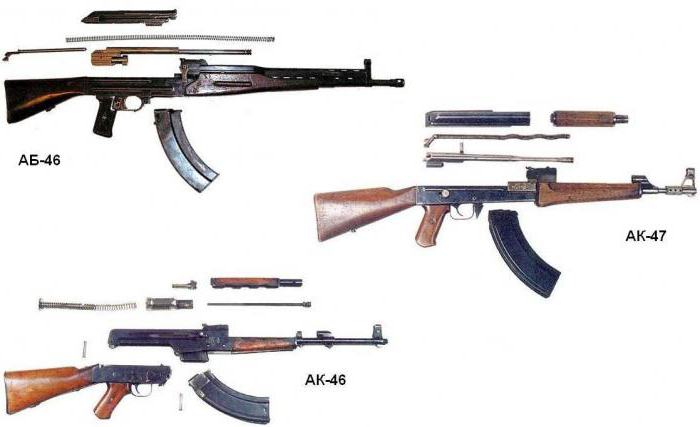
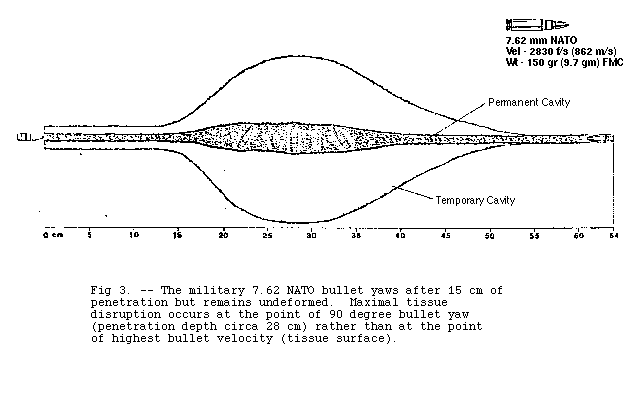
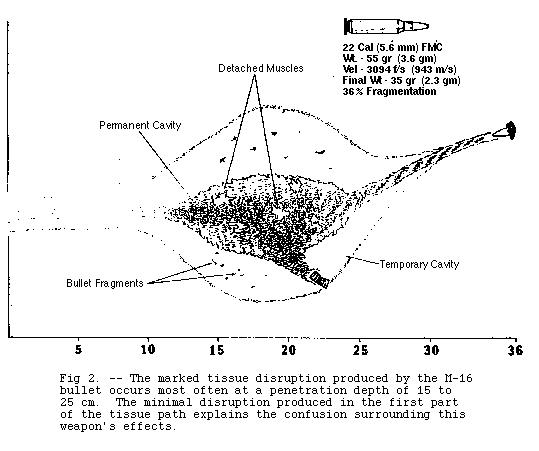
The Kalashnikov had been designed in 1947, (hence, AK-47), but it took more than a decade before a bug-free version (the AKM) was considered reliable enough to make standard-issue. (When this article refers to "AK-47s", most of the actual weapons involved were actually AKMs.)
The US, by contrast, had spent the decades since WWII resisting the assault rifle concept, so that when Vietnam rolled around their fantastically rich and well-funded military found its infantry outgunned by peasant militias wielding second-hand Soviet rifles. So the rifle went from initial acceptance, including these kinds of stupid last-minute design changes that are common in any project, to large-scale combat deployment within a year; normally, there would have been years of incremental usage to catch these bugs, but the rifle was so desperately needed that it was rushed to the front.
A book I've recommended in another thread, which gives a great introduction to the history and impact of the Kalashnikov in particular and assault rifles in general, is C.J. Chivers's "The Gun" (https://www.amazon.com/Gun-C-J-Chivers/dp/0743271734), or this shorter-form article he wrote in response to recent msas shootings (https://www.nytimes.com/interactive/2016/world/ak-47-mass-sh...)